What is Pacomarca?
Pacomarca is a Scientific Station created by Grupo Inca and is located in the highlands, between Puno and Cusco, on the Llalli – Ocuviri road, in Llalli, Melgar, Puno, Peru.
This station focuses on the genetic improvement of alpacas, as well as the transfer of high-value technology and genetic material to small producers in the Andean highland regions of Peru. It also seeks to promote the sustainability of alpaca farming by improving fiber quality, which allows for better market prices and continues to foster producers' interest in continuing to work with this resource.
Pacomarca produces a limited amount of alpaca fiber with unique characteristics on the market each year.

Pacomarca's Genetic Program
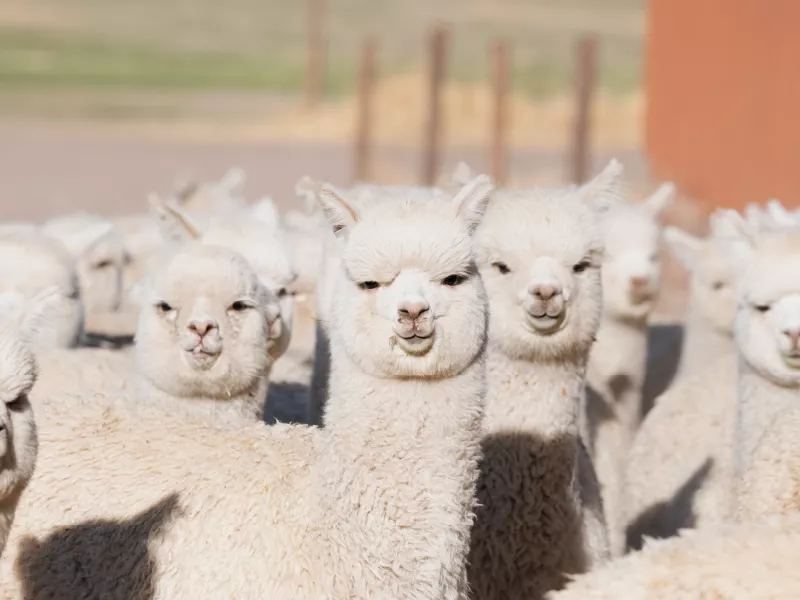
For several years, Pacomarca has developed an alpaca genetic improvement program, in which suris and huacayas of different shades are selected annually, based on a broad and detailed database about alpacas, using software called PacoPro.
This program is carried out in collaboration with the Department of Animal Production of the Complutense University of Madrid, under the direction of Dr. Juan Pablo Gutiérrez García, an international expert in the field. Additionally, regarding scientific research related to alpaca fiber, Pacomarca has an agreement with the National Agrarian University La Molina, the most prestigious in the areas of Veterinary and Animal Sciences, as well as with other community companies.
Thanks to various investigations, consultancies, and programs like Inca Shearing, Pacomarca is able to select the best fiber, which is found on the animal's back. When it arrives at the manufacturing plant in good condition, a more precise selection can be made, allowing for the development of qualities that compete with luxury markets.
Pacomarca also focuses on the conservation of the black alpaca population through its Black Alpaca program, which seeks to revive the breeding of black alpacas. At this station, there are more than 3,000 pure black alpacas, making it the largest population in the country in a single alpaca farm. It is there that the genetic evaluation program and a heritability study of its kind are carried out.
It should be noted that, to achieve genetic improvement, Pacomarca performs animal selection based on quantitative genetics, applying methodologies such as BLUP and ss-GBlup, statistical approaches mainly used in genetic improvement. Through these methods, information is collected on fiber diameter, fleece weight, body weight, conception rate, among others.
The relationship between Pacomarca and sustainability
Pacomarca has several programs that benefit both its environment and alpaca welfare. Resources are used to improve the genetics of Pacomarca alpacas, which are then donated to alpaca communities to strengthen the genetic quality of their herds, obtain higher quality fiber, and increase their income. Additionally, Pacomarca contributes to the technical training of producers and provides humanitarian support in fundamental areas such as housing, education, and clothing.
The programs that sustain Pacomarca's sustainability include:
- The Shepherd's Hut: An initiative that promotes the construction of adequate housing for alpaca producers living in remote, high-altitude areas. To this end, ecological housing prototypes have been designed using local materials. These homes are intended to improve the living conditions of producers in high-altitude areas.
- Circular Greenhouse: This program aims to improve the diet and overall health of nearby communities. The greenhouse provides an ideal environment for growing products such as onions, lettuce, celery, leeks, chard, beets, carrots, tomatoes, and for raising guinea pigs.
- Inca Shearing: A mechanized shearing method that allows shepherds to obtain cleaner and more uniform fiber, optimizing their time. This system significantly reduces stress and injuries to alpacas.
- Weaving Opportunities: This program provides older adults with the opportunity to produce high-quality items, revitalizing their economy and generating income that improves the quality of life for their families.
- Research: Pacomarca hosts a variety of research that contributes to different aspects of the alpaca fiber value chain, from genetic and genomic improvements to animal welfare, reproduction, and health.
- Donation of Male Alpacas: This initiative consists of donating 4 male breeding alpacas from Pacomarca, along with software containing data and information about the donated alpacas, including pedigree, fiber analysis, medullation percentage, colorimetry, and biometric data. Additionally, Pacomarca offers continuous training and support to ensure the implementation of proper breeding practices.
- Black Alpaca: It is a program dedicated to preserving and recovering pure black alpacas; Pacomarca continuously works to improve their fiber and genetics.